Low-Effort Wardrobe App: Less Manual Entry, More Useful Actions
The goal is not to document every sock. Start with a small useful wardrobe, review each item once, and let the Agent reuse that context across real decisions.
Quick answer: a low-effort wardrobe app should minimize repeated setup, not remove all human judgment. Photograph a representative item, review the proposed details once, save it, and reuse that record in Agent requests, outfit generation, planning, and other eligible actions.
Where wardrobe administration creates friction
Digital closets often fail during onboarding because the person is asked to photograph everything, crop every image, fill every field, and organize every category before receiving value. A better workflow earns trust with a small set of clothes and gives the user a useful outcome before asking for a complete archive.
If you are evaluating optional organization aids for attention-related routines, read the evidence-bounded guide to wardrobe apps and ADHD. It explains where a simple workflow may help, where individual experiences differ, and why an app is not treatment or diagnosis.
The minimum useful wardrobe setup
Start with five to ten items that represent real decisions: two tops, two bottoms, one layer, shoes, and any recurring work or travel piece. Choose garments that combine with each other. This is enough to test recognition, filtering, Agent context, and outfit generation without turning setup into a weekend project.
Photograph once, review once, reuse the context
- Add a clear garment photo.
- Inspect the cutout and proposed category, color, material, pattern, season, warmth, formality, and fit.
- Correct the fields that matter to your decisions.
- Save the item and its location.
- Reuse it in future requests without typing the same description again.
The value compounds because the corrected record can support more than one screen. The same jacket can appear in search, an outfit request, a trip plan, a capsule, or a visual comparison when that action is available. See the current SELION AI wardrobe workflow for the product-level overview.
Ask for outcomes in natural language
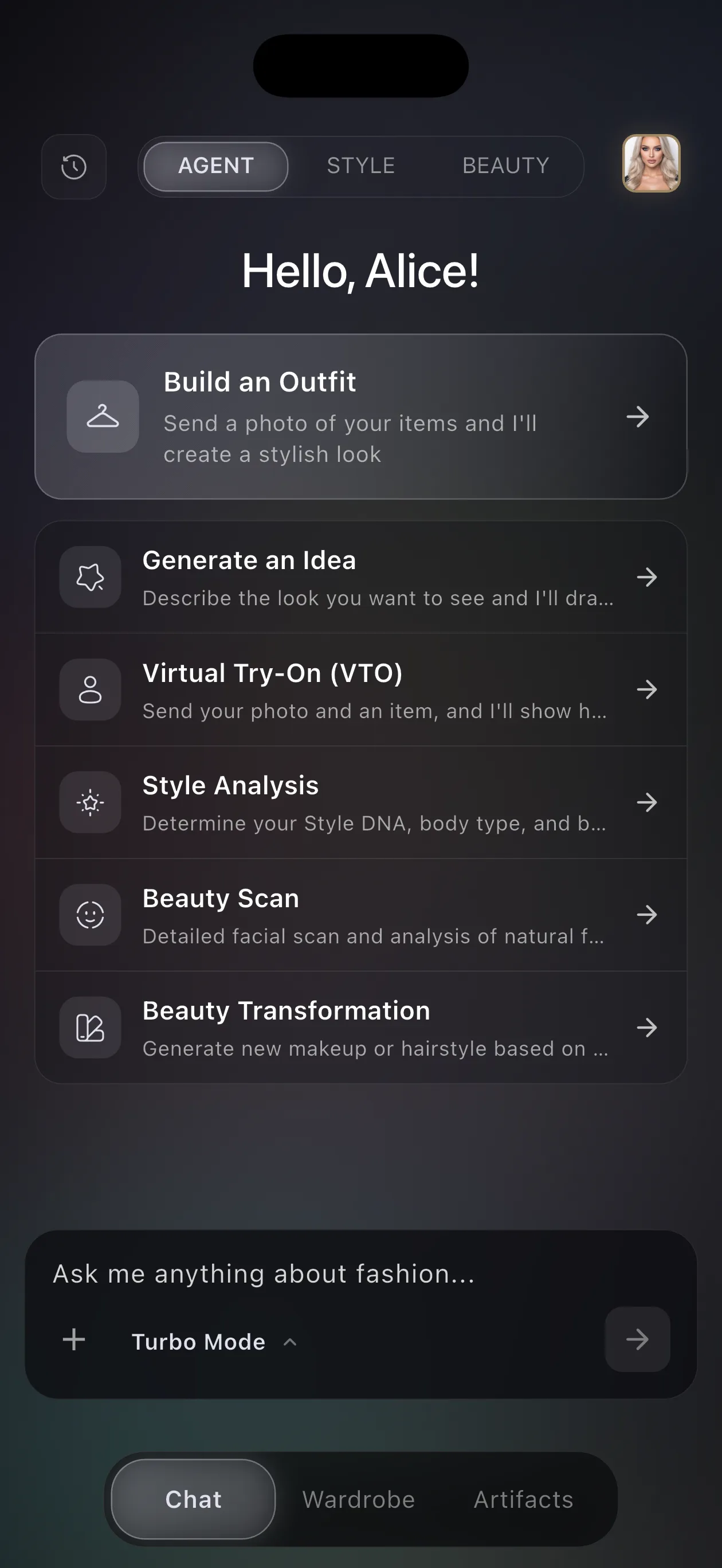
Instead of manually configuring every tool, describe the result: “Use my saved clothes for a warm business-casual outfit,” “Keep these shoes and make the look less formal,” or “Prepare three outfits for a weekend trip.” SELION Agent can use the available context and select a reviewable next action.
Actions the Agent can connect
Outfit direction
Combine saved items around an occasion, preference, or available weather context.
Planning
Carry wardrobe context into day, capsule, calendar, or trip decisions when supported.
Visual workflow
Start an eligible generation or try-on flow, then review the image as a preview rather than proof of fit.
Analysis
Use editable wardrobe data and explicit questions to surface patterns or gaps without treating suggestions as facts.
A five-item starter workflow
- Save one neutral top and verify its color and material.
- Add one more expressive top or layer.
- Add two bottoms with different formality.
- Add the shoes you wear most often.
- Ask for two contrasting outfits using only those saved items.
Reject one result with a specific reason and request a revision. This tests whether the product reduces repeated work while preserving control.
What cannot be safely automated
No app can infer every material, verify physical fit, know whether an item is clean, or understand every dress code from a picture. Purchases, sharing, paid generations, and real-world suitability deserve explicit review. Low effort should mean less repetitive administration, not hidden decisions. If the goal is fewer items rather than faster capture, use the minimalist wardrobe workflow as the next decision guide.
Give SELION Agent a real wardrobe task
Start with a small editable wardrobe, describe the outcome once, and review the action and result.
View official download optionsFrequently asked questions
Do I need to upload my whole closet before using a wardrobe app?
No. Start with a representative set of five to ten items and test whether recognition, editing, search, and Agent actions produce a useful result before adding more.
How can a wardrobe app reduce manual entry?
It can propose a garment cutout and item attributes from a photo, then reuse the corrected record across search, outfit requests, planning, and other available actions.
Does low effort mean fully automatic styling?
No. Important garment details, physical fit, comfort, availability, dress codes, and consequential actions still require review. The goal is to remove repeated setup while keeping control visible.