Wardrobe Gap Analysis
A wardrobe gap is not everything you do not own. It is a repeated missing capability that stops several real outfits from working.
Quick answer: wardrobe gap analysis looks for repeated constraints in the clothes you already own. A useful gap is a missing category, layer, color bridge, formality level, weather solution, or occasion option that blocks several realistic outfits. The goal is to identify the smallest useful addition—or discover that no purchase is needed.
What counts as a real wardrobe gap?
Combination gap
Several garments remain hard to wear because one compatible bridge piece is missing.
Occasion gap
Your wardrobe covers casual and formal situations but repeatedly fails at a real event type between them.
Weather gap
A recurring temperature, rain, wind, or layering need leaves otherwise useful outfits impractical.
Availability gap
You technically own the category, but the only item is uncomfortable, damaged, unavailable, or unsuitable for the repeated task.
“I do not own a red blazer” is not automatically a gap. “Three work outfits fail because I have no comfortable mid-layer at the required formality” is evidence of one.
Start with the wardrobe that drives real decisions
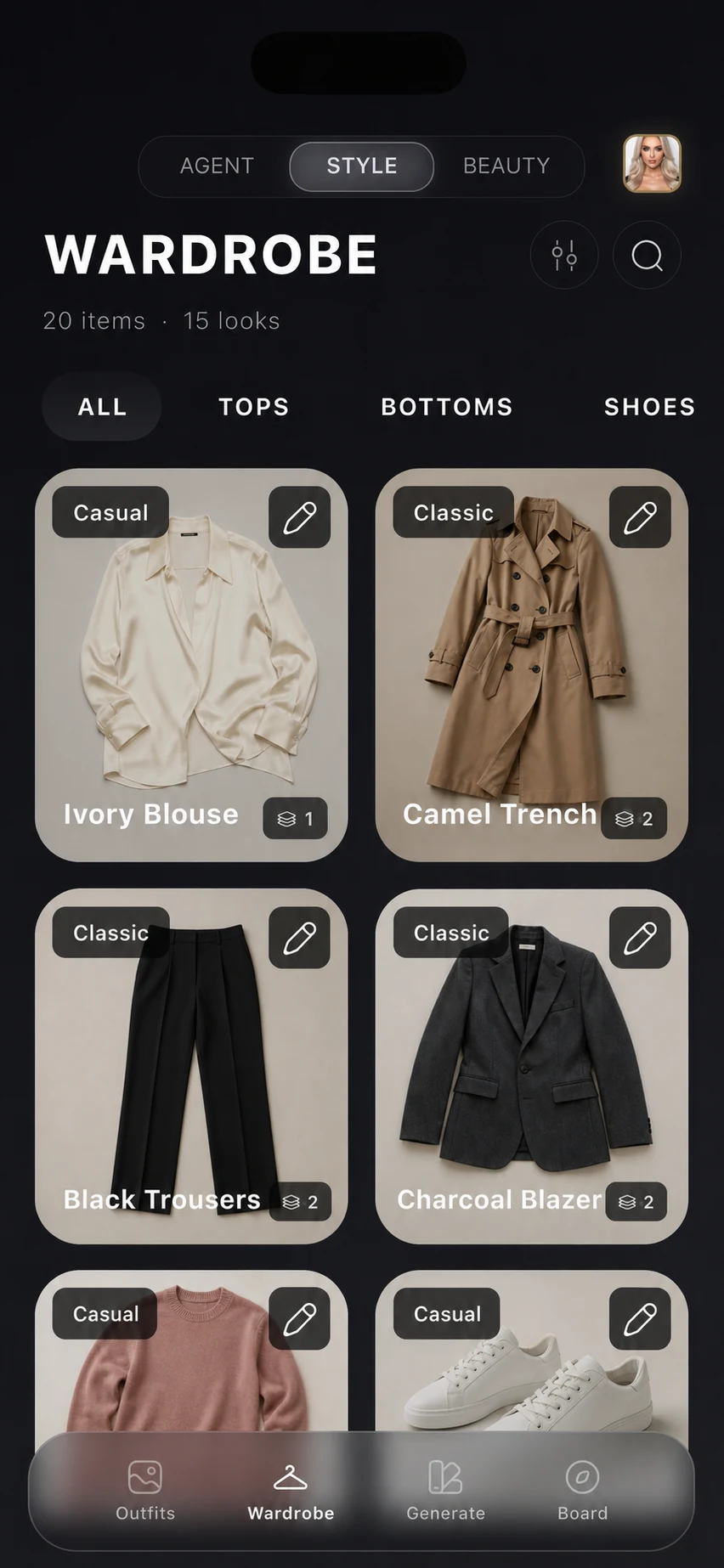
You do not need to catalog every sock. Begin with frequently worn tops, bottoms, layers, shoes, outerwear, and the difficult pieces you want to use more often. Check editable attributes such as category, main color, material cues, pattern, season, warmth, formality, fit, and occasion before asking the Agent to reason over them.
A seven-step wardrobe gap analysis
- Name three recurring situations: for example office days, wet commutes, and casual dinners.
- Build or request two realistic outfits for each situation using saved clothes.
- Record where a combination fails: color, layer, formality, weather, footwear, comfort, or availability.
- Repeat the test with a different starting item.
- Group failures that point to the same missing capability.
- Try styling, tailoring, repair, rotation, or an overlooked item before planning a purchase.
- If the gap remains, define the required function before choosing a product.
Ask the Agent a constrained question
Instead of asking “What should I buy?”, ask: “Using my saved work clothes, which repeated constraint prevents the most complete outfits?” or “Can anything I own already solve this rain-layer gap?” SELION Agent can use available wardrobe and situational context to prepare an analysis or recommendation. Treat the answer as a hypothesis to test against the real clothes.
Evidence that a gap deserves priority
- The same missing function appears in several outfit attempts.
- It affects a situation that actually occurs in your calendar or routine.
- No comfortable, available item already fills the role.
- The addition would work with multiple garments rather than one copied look.
- The required color, formality, warmth, and care needs are explicit.
False gaps that create unnecessary purchases
- Trend gap: an item is popular but solves no recurring wardrobe problem.
- Discovery gap: you forgot a suitable item because the closet is not searchable.
- Styling gap: the needed combination exists but has not been tried.
- Condition gap: repair, cleaning, or tailoring would restore an owned item.
- Fantasy-life gap: the item suits an imagined routine rather than the one you live.
Turn a gap into a bounded specification
Describe the function before browsing: “a water-resistant, packable mid-layer at smart-casual formality, compatible with navy and charcoal, comfortable for walking.” This separates the wardrobe need from a particular brand or product and makes it easier to reject attractive items that do not solve the problem.
What still requires human judgment
An Agent cannot determine your budget, ethics, tactile comfort, exact fit, care tolerance, local availability, or whether a purchase is worthwhile. Verify those factors, current purchase terms, and the physical garment yourself. A good gap analysis may end with no purchase at all.
Before treating a chart as a shopping list, separate wardrobe analytics from a repeated functional gap.
Give SELION Agent a real wardrobe task
Start with a small editable wardrobe, describe the outcome once, and review the action and result.
View official download optionsFrequently asked questions
What is a wardrobe gap analysis?
It is a structured review of repeated outfit constraints in the wardrobe you already own. It looks for missing functions that block several real outfits, not every item you do not own.
Can AI tell me what is missing from my wardrobe?
AI can use corrected wardrobe records and an explicit situation to surface possible category, color, formality, season, or layering gaps. The result is a hypothesis; you still verify owned items, fit, comfort, budget, and real need.
Does every wardrobe gap require buying something?
No. A forgotten item, a different combination, repair, tailoring, cleaning, rotation, or a clearer dress-code plan may solve the constraint without a purchase.