How an AI Stylist Remembers Your Style Without Starting Over
A practical model for persistent personalization: what the system should remember, what it should ask again, and what always remains your decision.
Quick answer: an AI stylist becomes more useful when it can carry forward stable preferences, wardrobe facts, and explicit corrections without pretending that every past choice is permanent. Good memory reduces repetition; good controls let you inspect, correct, or override it.
The four layers behind a useful recommendation
A styling answer can look personal while still being generic. The difference is grounding. A wardrobe-aware agent should be able to separate four kinds of information and use each for the right job.
Your wardrobe
Example: the navy blazer and white sneakers you actually own.
Behavior: stay editable and link recommendations back to real items.
Explore the current wardrobe-aware AI stylist and the limits of its saved context.
Durable preferences
Example: you prefer restrained colors for work.
Behavior: carry forward until you correct or remove the preference.
Current context
Example: rain, a client meeting, or a weekend trip.
Behavior: influence the current request without becoming a permanent identity.
Feedback
Example: you rejected a combination because it felt too formal.
Behavior: improve the next suggestion without turning one reaction into a universal rule.
What is worth remembering
Stable information saves the most effort. That can include preferred silhouettes, colors you reach for, dress-code boundaries, climate, repeat occasions, and direct statements such as “do not suggest heels for my commute.” The strongest signal is an explicit correction, not a guess inferred from one photo.
Wardrobe facts are different from taste. Category, color, season, material, and location describe an item; a preference describes how you want to use it. Keeping those concepts separate makes mistakes easier to repair. If a shirt was tagged as outerwear, fixing the tag should not rewrite your style identity.
What the stylist should ask again
Context expires. Weather changes, events have different expectations, laundry makes an item unavailable, and your preferred level of formality can vary by day. A useful agent rechecks consequential context instead of silently treating yesterday as a permanent rule.
- Ask again when the occasion, location, weather, or available items may have changed.
- Confirm an action before it creates, saves, purchases, shares, or consumes a paid generation.
- Surface uncertainty when wardrobe data is missing or a photo does not reveal fit and fabric clearly.
- Let a user say “only for today” so temporary constraints do not pollute durable memory.
Memory needs visible control
Personalization is not a license for invisible automation. You should be able to correct clothing data, clarify a preference, reject a suggestion, and understand whether the system is proposing an action or executing it. Review the current privacy policy and platform disclosures before uploading personal images or relying on cloud-connected features.
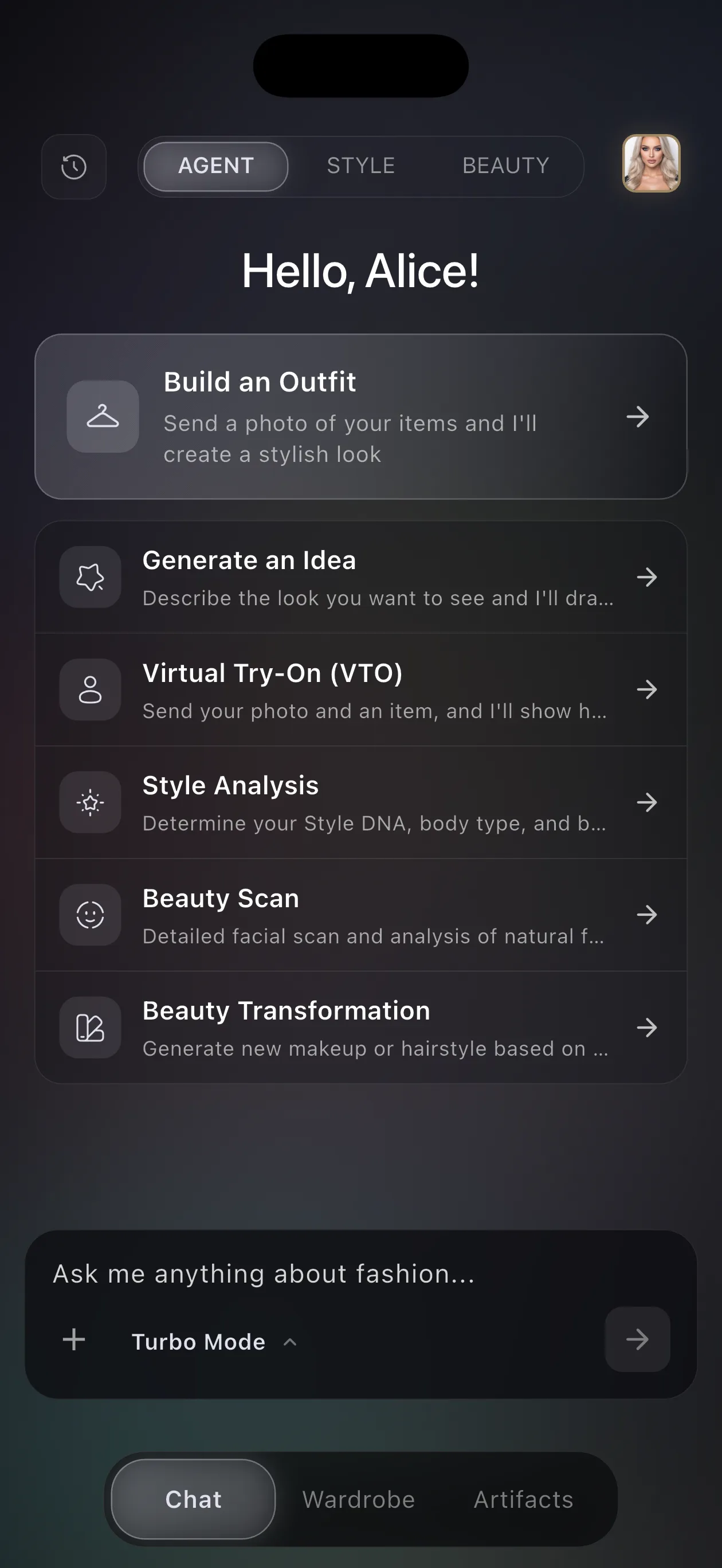
In SELION Agent, Default Mode presents a proposed tool action for approval. Turbo Mode can continue through eligible actions automatically. The useful design principle is broader than either mode: autonomy should be understandable, intentional, and reversible.
A five-request memory test
- Add a small but varied wardrobe and correct at least one item tag.
- State one stable preference and one temporary constraint.
- Request an outfit for a real occasion using only owned items.
- Reject one result with a specific reason, then ask for another direction.
- Return later and check whether the stable preference remains while the temporary constraint does not dominate.
This test reveals more than a long feature list. It checks whether the product can retain useful context, respect corrections, ground output in your closet, and keep you in control.
What memory cannot solve
Stored preferences cannot verify physical fit, comfort, fabric condition, cultural expectations, workplace policy, or safety. A photo can distort color and proportion. An AI stylist can narrow choices and explain its reasoning, but the final check still belongs to the person wearing the clothes.
How SELION Agent fits this model
SELION.AI is a fashion and beauty app for iOS and Android. Its verified public capabilities include a digital wardrobe, wardrobe-aware personal styling, outfit generation, virtual try-on, weather-aware context, capsule and trip planning, and style analysis. SELION Agent is the conversational layer that connects those tools with wardrobe and preference context.
For current availability, pricing, feature limits, and data handling, use the official download page, the live in-app purchase screen, and the current privacy policy.
Frequently asked questions
What should an AI stylist remember?
It should retain explicit, useful information such as wardrobe facts, stable preferences, recurring constraints, and corrections. Temporary context such as today's weather or a one-off event should not automatically become permanent.
Can I correct an AI stylist's memory?
A useful product should make corrections and overrides possible. Test whether you can edit wardrobe data, clarify a preference, reject a result with a reason, and control automated actions.
Does SELION Agent use clothes I already own?
SELION.AI includes a digital wardrobe and wardrobe-aware personal styling. Feature behavior and availability can vary by platform and current app version, so verify the current product flow.
Try the workflow with your real wardrobe
Review the official app listing and current privacy information, then start with a small, correctable wardrobe sample.
View official download options