Plan the Week With an Outfit Calendar
A useful outfit calendar is not a gallery of future looks. It connects dates, real commitments, available clothes, and one plan you can revise when the week changes.
Quick answer: an outfit calendar assigns saved garments or outfits to dates so you can prepare before the decision becomes urgent. A useful planner can combine a week view, available events, wardrobe context, and weather when present. SELION Agent can help prepare a reviewable plan from one request; you remain responsible for permissions, schedule accuracy, dress codes, availability, and last-minute changes.
Outfit calendar vs outfit generator
An outfit generator creates possible combinations. A calendar answers when and why a chosen combination will be used. The two can work together, but they solve different problems: creation versus allocation across real dates and commitments.
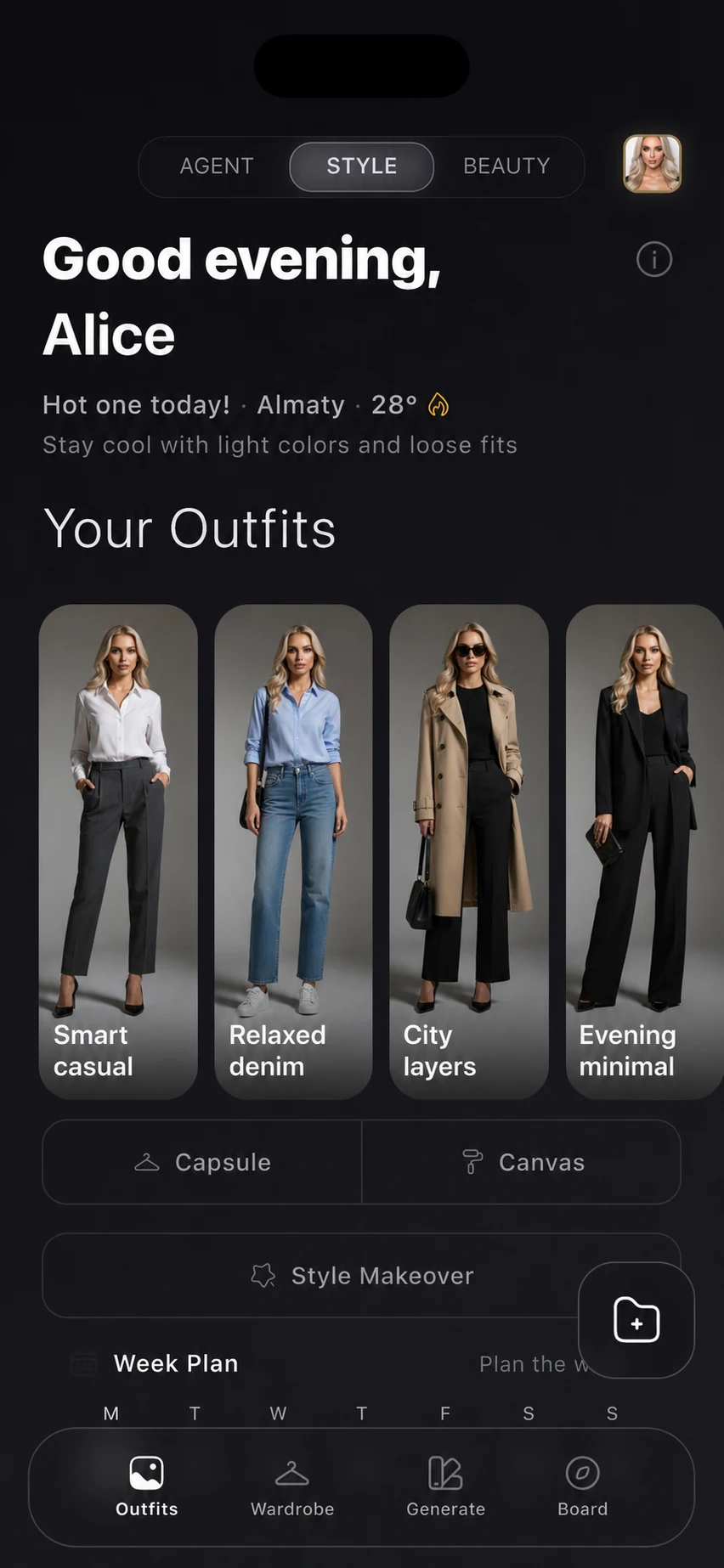
What belongs in a weekly outfit brief
Fixed commitments
Meetings, travel, events, and formal obligations establish the non-negotiable moments.
Use the SELION outfit calendar, or turn the week into a trip packing plan when travel changes the brief.
Weather range
Temperature, rain, wind, and indoor transitions affect layers and footwear when current data is available.
Wardrobe availability
Laundry, repairs, repeated pieces, and the location of garments determine what can actually be worn.
Personal constraints
Comfort, mobility, desired formality, one favorite item, and repetition tolerance make the plan yours.
A useful one-request plan
Ask: “Plan my workweek from clothes I own: formal presentation Tuesday, rain Wednesday, casual Friday, comfortable shoes, and no more than two jackets.” SELION Agent can use available wardrobe, schedule, and weather context to prepare eligible actions or suggestions. Review the plan before saving anything.
Plan the week in six passes
- Add the fixed events and identify the days with real dress requirements.
- Check the forecast range, but keep uncertain days flexible.
- Choose anchor pieces for the hardest days first.
- Reuse compatible layers, shoes, and accessories without scheduling a dirty or unavailable item.
- Save the outfits or items to dates and keep one fallback combination.
- Review tomorrow each evening and revise only what changed.
Calendar access should be explicit
If device-calendar events are used, the app needs permission and the event details must be accurate enough to help. A title such as “Client dinner” may still omit venue rules, cultural expectations, travel time, or whether the event is outdoors. Denying calendar access should not prevent manual planning.
Do not let a forecast lock the whole week
Use weather to choose layers and create fallbacks, not to freeze seven days of decisions. Forecasts change, indoor temperatures vary, and a 20°C walk is different from a 20°C commute by car. Recheck close to the date and change the plan when the real conditions differ.
Repetition is a planning feature
A calendar makes deliberate repetition visible. Reusing trousers, shoes, or an outer layer can reduce preparation while keeping the overall look different. The relevant constraint is cleanliness, availability, comfort, and context—not whether an item appeared earlier in the week.
What the Agent should reduce
The Agent should reduce repeated navigation and setup: one request can describe the week, constraints, and item preferences. It should not silently assume an event, save a poor plan, or decide that you must buy something. You need a visible proposal, an opportunity to revise it, and a clear action boundary.
What an outfit calendar cannot know
The calendar cannot prove that an item is clean, comfortable, correctly fitted, at the right location, or permitted by a workplace or venue. It also cannot predict schedule changes. Treat the plan as prepared context, then verify the day yourself.
To see how an owned-clothes request begins before it becomes a saved plan, inspect SELION's current outfit generation workflow.
Give SELION Agent a real wardrobe task
Start with a small editable wardrobe, describe the outcome once, and review the action and result.
View official download optionsFrequently asked questions
What is an outfit calendar app?
It is a planner that assigns saved outfits or clothing items to dates. More capable versions may also show available events or weather context, but those depend on permissions, current data, and the app version.
Can AI plan a full week of outfits from my wardrobe?
An Agent can use available wardrobe and situational context to propose a week plan from one request. You should review garment availability, laundry, fit, comfort, weather, events, and every saved action.
Do I have to connect my device calendar?
No. Manual outfit planning should remain possible. If calendar events are used, grant access deliberately and verify that event details contain enough context for the decision.