An AI Packing List From Clothes You Own
A useful packing plan starts with the trip and the clothes available. It should reduce duplicate pieces, connect items to daily looks, and keep every assumption open to review.
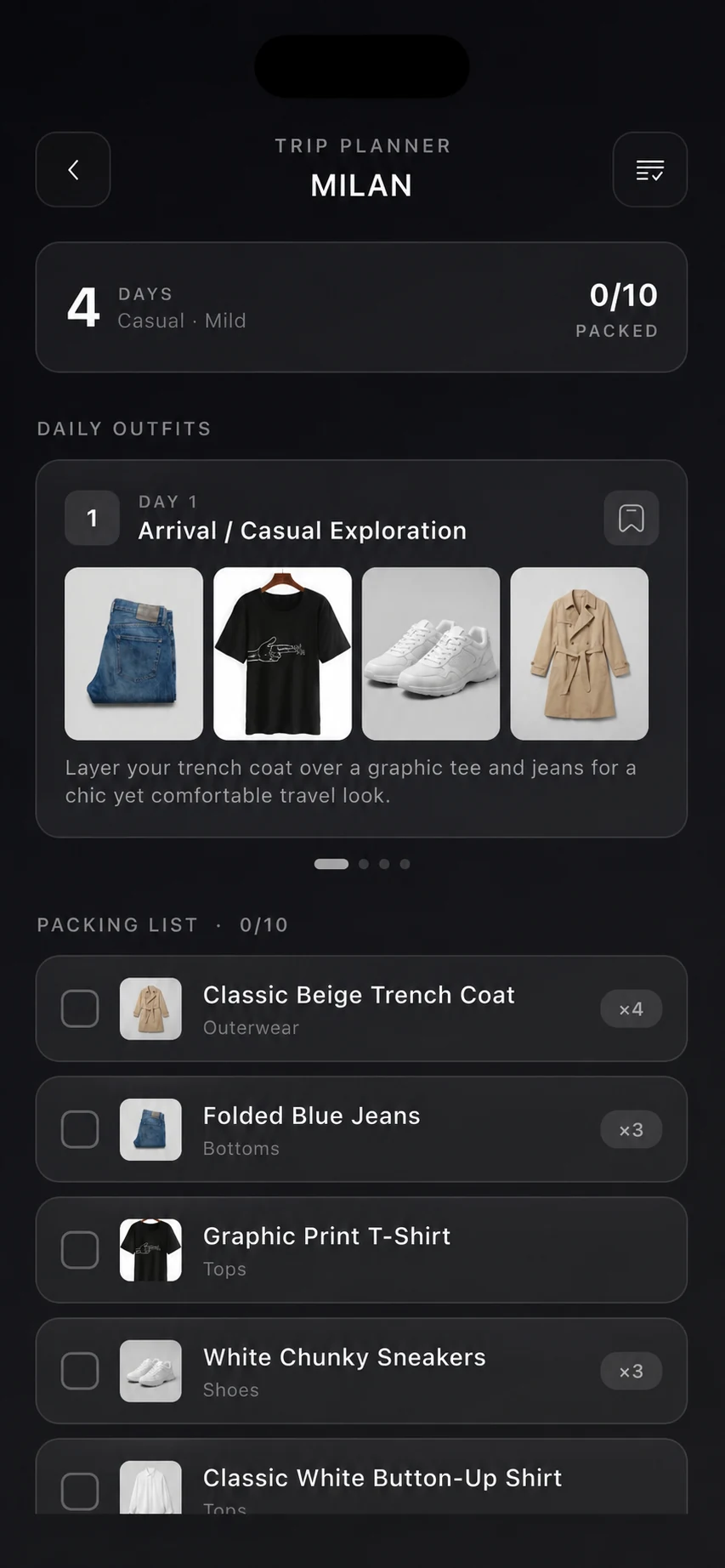
Quick answer: a wardrobe-aware AI packing list uses trip context and saved clothing records to propose what to bring. It can connect destination, duration, trip type, climate or available forecast, activities, and owned garments to daily outfits and a checklist. You still verify weather changes, laundry access, baggage rules, condition, fit, and anything outside the wardrobe.
Why a generic packing checklist is not enough
A generic list remembers categories: shirts, trousers, shoes, jacket. It does not know which pieces work together, whether one layer covers three days, or whether the only “smart shoe” is uncomfortable. A wardrobe-backed plan can name the actual saved items and show how they support the trip.
The minimum useful trip brief
Place and dates
Destination and duration establish the planning window. Forecast coverage can vary for distant dates.
Open Trip Planner to build a packing plan from your wardrobe instead of starting from a generic checklist.
Trip type
Casual, business, formal, outdoor, or mixed use changes formality and practical requirements.
Activities
Walking, meetings, dinners, beach time, events, and transit days need different footwear and layers.
Constraints
Luggage size, laundry, repeated wear, comfort, dress codes, and one must-pack item keep the plan realistic.
Ask the Agent once, with constraints
Try: “Plan four days in Milan from my saved wardrobe: casual daytime, one smart dinner, lots of walking, mild weather, carry-on only, and keep the beige trench.” SELION Agent can route an eligible request into trip planning and present a plan for review. The exact action and allowance depend on the current app version and account state.
A seven-step packing workflow
- Correct the records for likely travel items, especially category, color, warmth, formality, and footwear.
- Enter destination, dates or duration, trip type, and climate context.
- Add the activities and constraints that a forecast cannot infer.
- Generate the initial plan and inspect every daily outfit.
- Look for pieces that serve only one weak purpose and duplicates that do the same job.
- Replace unavailable, uncomfortable, damaged, or unsuitable items.
- Check the final list while physically packing and mark items only when they enter the bag.
How to interpret “missing essentials”
A missing-item suggestion is a hypothesis about the trip, not a shopping order. First check whether the wardrobe record is incomplete, whether another owned item can fill the role, whether the activity is optional, or whether rental, borrowing, repair, or laundry changes the need.
Use outfits to pack lighter
Count functions, not days. One neutral layer may work across travel, dinner, and rain protection; one pair of shoes may cover several activities. Review the outfit matrix and remove pieces that do not participate in a credible combination. Keep enough redundancy for weather, spills, and laundry reality.
Weather is context, not certainty
Forecasts change and may not represent elevation, wind exposure, indoor climate, or the exact hours of an activity. Recheck near departure, inspect rain and temperature ranges, and keep a manual override. The physical garment and local requirements are stronger evidence than a label such as “mild.”
What the packing plan cannot decide
The app cannot verify passport, medication, electronics, airline rules, cultural requirements, cleanliness, physical fit, comfort, or whether an item is actually in the closet. Use it for wardrobe planning, then complete a separate travel-safety and document check.
Give SELION Agent a real wardrobe task
Start with a small editable wardrobe, describe the outcome once, and review the action and result.
View official download optionsFrequently asked questions
Can an AI packing list use clothes I already own?
Yes, a wardrobe-aware planner can use corrected saved garment records to propose daily outfits and a checklist. You still verify item availability, condition, fit, comfort, and the final bag.
What information should I give an AI trip outfit planner?
Provide destination, dates or duration, trip type, likely activities, climate or available forecast, luggage constraints, laundry access, dress codes, and any item that must be included.
Does an AI packing list replace a normal travel checklist?
No. Wardrobe planning does not verify passports, medication, electronics, bookings, airline rules, or local requirements. Keep a separate travel-essential and safety checklist.